Sunday, October 20, 2013

Stalker

An industrial art house film—typical of Eastern European cinema—that's about as sci-fi as A CLOCKWORK ORANGE. Title character Kaidanovsky guides intellectuals Grinko and Solonitsyn through "the Zone"—an area where the laws of physics don't apply—so that they may encounter a "Room" that grants wishes to whoever enters it. Tarkovsky's signature long-takes slow the movie down, but not enough for it to seem overlong. The film's overriding flaw is the lack of payoff; even with a modestly budgeted dialogue-driven film, Tarkovsky should have found a way for the Zone to live up to what Kaidanovsky's character built it up to be. Final shot is terrific enough not to be left too disappointed and Artemyev's subtle score fits perfectly.

Monday, September 30, 2013

Insidious: Chapter 2

The Lambert family returns to dig deeper into their connection to the spirited world. Scares ensue right from the get-go, but are nothing more than an insincere sham to set the tone of a film that has far less substance than its predecessor. The premise, however, is interestingly a mixture of a sequel, a prequel and a parallel (which covers events occurring at the same time as the first film). The film seems to be inadvertently broken into halves, the first of which covers Byrne's character and the second covering Wilson's, creating an overall incoherent horror movie. It actually gets pretty interesting during the second half, but when the first half is so dull, it's a lot to expect your audience to be so gracious and maintain an open-mind the entire film. There also seems to be an effort to make this installment "the happier one of the series", and the ham-handed attempt to make as much use of the reprising characters as possible is one of the saddest things a sequel has seen since OCEAN'S THIRTEEN. Hopefully nobody will be reminded of this movie if someone ever decides to adapt HOUSE OF LEAVES to the screen.

Saturday, September 21, 2013

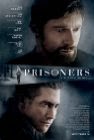
Prisoners


After deeply religious father Jackman's daughter goes missing with a neighbor girl, he targets prime suspect Dano while detective Gyllenhaal pursues other leads. The film doesn't necessarily succeed at being epic, but it is terrifically well-paced for clocking-in at over a two-and-a-half hour runtime—director Villeneuve does an excellent job using fade-outs to skip passed the obvious melodrama. The story involves emotions and chills from all aspects of an unthinkable crime, including: the family members of the abducted children, the investigators and even those close to the suspect. Unfortunately, the movie is dragged by too many obvious detective blunders by Gyllenhaal's characters: 1) Whaaa? I can't discreetly park my car in the middle of the road in broad daylight? 2) Whaaa? I'm going to have all family members take a polygraph, but not consider looking into the fact that one of the fathers owns an abandoned building the girls may be at? 3) Whaaa? When I finally find out one of the fathers owns an abandoned building and I establish my new suspicions of him, I SHOULD call a search team? 4) Whaaa? I've been seeing a lot of mazes ever since I started investigating these girls' disappearances. There IS a connection?

Another unfortunate downfall is the annoying and awkward light adjustments between interior and exterior scenes.

The moral of a film should either raise questions, or provide answers or some sort of hope. This film just kind of confuses, as it doesn't really grasp hold of how suspects are sometimes guilty until proved innocent or how there are some ridiculous limitations the law has at preventing and/or solving crimes. Either: A) make a statement, or B) give the audience something to reflect on. This film seems to do neither. 

It would be nice to go into a crime-thriller with an open-mind and NOT have to suspend as much disbelief. But all-in-all, not a complete waste of a film.

Wednesday, August 28, 2013

The Cornfield People

The Cornfield People: The youngest lost film 

Wikipedia describes a lost film as "a feature or short film that is no longer known to exist in any studio archives, private collections or public archives such as the Library of Congress."


The further back in film history you go, the longer the list of lost films get.  For the most part, this is the result of studios failing to preserve anything made before the 1930s because these films were thought to have no commercial value (wrong!), or because the nitrate-film that was used for most movies before 1952 caused easy deterioration and/or spontaneously combustion.  The Martin Scorsese's Film Foundation estimates 90% of movies made in the silent film era to be officially lost!


While lost films are indeed common during the early age of cinema, the list gets shorter and shorter once you hit the 1950s.  By the 1970s, the list narrows to only about four films.  A modern lost film is as rare as a gold dust.


A 1999 production called Puppet was thought to have been the most recent lost film to date, and before that was Sam Raimi’s film debut entitled Clockwork in 1978.  Both have since been rediscovered.  However, there is one film called The Cornfield People that is believed to be filmed and completed between 1999 and 2001, and is currently considered the youngest lost film.  

The few people who have heard of this movie—and the fewer who have claimed to have watched it—know it better for its controversial subject matter: the meaning of life and what comes after death.  Many maintain that the film doesn't exist and never did, given the lack of proof—even a lot of the old lost films have proof of existence through publicity stills, ticket stubs, theatre listings or copyright registration… but not The Cornfield People. 

However, Joey L. Asap’s (Red Sands at Dawn and Buried with Leather Gloves) may have been the one at the helm of The Cornfield People.


Around late-1999, Asap was spotted with a small film crew in the Lake Stevens, WA, near the cornfields at the Carleton Farm.  Nothing ever came from this well-known citing, leading many to assume he was filming his unrealized fourth film… which is rumored the mysterious Cornfield People.

Asap's website had confirmed his fourth film's premise was to be based on a banned essay he wrote for Paranormal Pacific entitled “The Truth and No Room for Debate”.  Considering that Paranormal Pacific published a lot of articles that either riled people up or made the small press look bad, it has been long discussed what Asap’s essay could be about and why it was ultimately banned.  Many at www.joeylasap.org’s message board conclude that the controversy of Asap’s essay could easily be related to the meaning of life and what comes after death… the supposed plot of The Cornfield People!

If anyone has any more information about this supposed film, please reply to this blog or e-mail me at dant3p3rk1ns@gmail.com.

Friday, May 24, 2013

Wake in Fright

Ambitious piece about a schoolteacher's (Bond) sensitive personality quickly spiraling into a state of harshness and recklessness, all triggered and influenced by overheated drunks he meets while passing through the outback to Sydney on Christmas vacation. Visually intriguing to anyone who has never been to Australia. The overall story may have worked better if it focused more on being a drifter instead of the psychological aspect; still, why pry at such excellence? Bond is exceptionally convincing in his transformation; while the supporting characters are even more likable and civil than the protagonist, even when the film tries to portray them as the instigators of the main character's behavior—especially Pleasence. About an hour in is when the pacing gets aimless and stays that way until the climax; so, the film definitely won't meet every movie-goer's idea of "brilliance". Despite any flaws one might try and spot, the film is gripping and definitely leaves an impression. The 360-degree opening shot of outback-nowhere-ness is nothing short of awesome. 

Hit and Run

Shepard stars, writes, co-directs, co-produces and co-edits this skin-deep action/"comedy" about a former getaway driver helping his fiancé get to Los Angeles but is sidetracked when his past catches up with him along the way. The role of the fiancé is played by Shepard's real life fiancé Bell. Talk about self-indulgent. Arnold has his moments of quick childish humor at the beginning, but that quickly wears thin when his character drifts into his own sub-plot. Cooper perhaps has one of the most shameless roles of the last few years as a dreadlock'd ex-con who manhandles people bigger than them if they buy cheap dog food (Oh no! what a waste of flesh) and then steals their dog from them (because a dog is better off with a criminal than someone who's poor—or am I supposed to assume the guy is a criminal because he is big and scary?). There are also some weird cheap-shots that are supposed to be edgy, but really just lack any sort of real creativity (the Filipino prison rapist joke, for example). The soundtrack is just Shepard's iPod on random. Shepard, Shepard, Shepard, Shepard. Oh, and he does his own stunts too. Wow! what a well-rounded guy. Too bad all his talent can't make a decent film.

Sunday, April 14, 2013

Evil Dead

Contemporary effort of the now-legendary 1981 Raimi film is refreshing at first, but finds itself being overlong once all the gore and scares have peaked in the middle. The story-differences between the old and new films create an intensity that gives fans from the original series an equal amount of jolts as the newcomers, and the cast is slightly more likable than your typical horror film—though that's still not saying a whole lot, unfortunately. The opening scene is completely unnecessary, even though it was pretty cool. The main issue with this film is the main issue with many remakes… modernization. And the main issue with modernization is that itself will one day be outdated, not unlike its inspiration. Thus, pointlessness. The different ending doesn't change anything either; nice try. If the objective was to place the audience in Hell for 90 minutes, mission accomplished; but there is a feeling of emptiness when camp and low-budget are absent from an Evil Dead story.

Tuesday, January 1, 2013

The Dark Knight Rises

After eight years in seclusion, Batman resurfaces to face Bane, a mastermind bent on destroying Gotham and has ties to Bruce Wayne's past. Christopher Nolan's conclusion to his Dark Knight trilogy should be treated as a wrap up rather than a third installment. Despite many new characters being introduced, even their conflicts and motives are derived from events that occurred in the previous two films. Such an approach could be seen as a weakness, since the conflict could just end up being sort of a rematch rather than moving the story forward; however, Nolan's approach works terrificly. Over an hour is shot in stunning IMAX, but the film is more touching than it is intense… and that's its best quality. Hardy steps in as the genius mercenary Bane, who is slightly bigger, slightly stronger and slightly smarter than Batman, thus making him a challenge best suited for the grand finale. The Joker works best as Batman's arch-nemesis since they are polar opposites, with The Joker standing for everything Batman stands against. Two-Face works best as Batman's most tragic enemy because Harvey Dent is very much like Bruce Wayne… the only difference is: Dent copes with his tragedy through revenge rather than seeking justice as Wayne did. Bane works best as Batman's most challenging villain because of his physical and mental superiority—forget the Bane you saw in "BATMAN & ROBIN". Nolan carefully chose all his villains in the series wisely and executed them perfectly. Hardy had big shoes to fill following Ledger's posthumous Oscar winning performance; while Bane is no Joker, Hardy does a satisfying job and should not be compared to Ledger's performance as they are completely different roles. It is Michael Caine, however, that delivers the most memorable and touching performance of the entire film. A wonderful conclusion to a wonderful trilogy.

Saturday, December 29, 2012

Django Unchained

Spaghetti Western—or is a Spaghetti Southern more appropriate?—about slave-turned-bounty hunter Foxx and companion/mentor dentist-turned-bounty hunter Waltz making their flesh-for-cash living, ultimately ending up at the Candyland Plantation to rescue Django's estranged wife Washington. Very much a Tarantino film, delivering homages to the genre in the same manner as "KILL BILL: VOL. 2" and "INGLOURIOUS BASTERDS"; however, this addition to Tarantino's impressive filmography as director/writer is possibly the least dialogue-driven, even more so than "KILL BILL: VOL. 1". To some who did not care for or are not familiar with "RESERVOIR DOGS" and "PULP FICTION", this may not be a disappointment. On the other hand, viewers/fans who are very much familiar with Tarantino's style of making full use of his actors' words, expressions and interactions—a style which has gained him much praise—might be slightly let down that "DJANGO UNCHAINED" is more about visuals and less about emotion. Well-acted, with plantation owner DiCaprio and his head slave Jackson offering the most memorable performances. Foxx is great, but delivers an interchangeable performance; and Waltz is more than charming, but his talents are put to very similar use as in "INGLOURIOUS BASTERDS". Neither Foxx nor Waltz should be criticized as they obviously gave it their best; perhaps the problem is that the two lead roles are two-and-a-half-dimensional characters—not quite two-dimensionally dull and not quite three-dimensionally gripping… they are both caught in that invisible world between script and screen. The film's flaws are not quite apparent until the climatic sequence, a point of the film that changes from slick and stylish to complete sloppiness. Did they use red dye and varnish for the blood or what? But even from a critical standpoint, at least 75% of the film is terrific and most shortcomings are only skin deep.

Friday, October 5, 2012

The Expendables 2

Follow-up to the 2010 action/adventure, this time with more stars and more action. Another sequel that fails to see that more isn't always merrier. Just like in the first, Stallone and Statham are the only ones with any purpose while the rest of the group is just there because they were once popular tough guys. Rourke's absence creates a void, though his character didn't do much in the first movie anyway—his uselessness is actually substituted with Chuck Norris' couple walk-on cameos that add nothing to the story; and Li annoyingly gets third billing again despite his character being drastically smaller than in the first film. It's nice to see Schwarzenegger and Willis' characters expanded though. Jean-Claude Van Damme joins the cast as the main antagonist; however, a guy like him should have been a way better bad guy than Eric Roberts was. The first film was refreshing because it didn't fall into the trap of corny lines, and the setting was original and interesting; unfortunately, this film does not have the same quality. The climax is especially lame. No sign of Giselle Itié; instead, we are introduced to Yu Nan, who briskly shoves herself into the movie like a token Bond girl. Must the women in these films be so… expendable (no pun intended)? Add yet another sequel to the inferior list.

Thursday, October 4, 2012

The Expendables

It's funny when the trailers, posters and other movie-advertisements make a film look cornier than it actually is. Stallone's 2012 action/adventure—though not perfect, but very entertaining—falls into this category. A tight-knit group of mercenaries go to Vilena to stop an evil ex-CIA officer (Roberts) who is using a powerful general (Zayas) as a puppet to dictate the small helpless island. The setting, design, style and tone of the film are all superb; and while the action is above-par, it gets a bit cartoonish and fails to be mind-blowing. While the acting and choice of casting is exceptional, the characters are either cliché, hypocritical or both—Zayas seems to be the only actor amongst the large ensemble that brings to life a character convincingly conflicted and three-dimensional. The amount of characters is completely unnecessary, with most of them lacking any purpose—even Mickey Rourke can't seem to earn his keep despite having a terrific monologue mid-film. While the pros outweigh the cons, there are a couple of unacceptable missteps in this blockbuster homage. Have fun watching, because that's all it really offers… and that's not a bad thing…

Tuesday, September 25, 2012

My Week with Marilyn

An interesting and delightful film adaptation of two Colin Clark (played terrifically shyly by Redmayne) books taking place during the making of THE PRINCE AND THE SHOWGIRL. The spotlight is no doubt saved for Marilyn Monroe, played convincingly—not just physically—by Williams. However, despite the story's involvement of someone as iconic as Monroe, the interest tends to focus more on those around her, such as Ormond, Portal, Wanamaker, Scott and especially Branagh as Sir Laurence Oliverier, the latter of which steals the show—only Marilyn should steal the show, but not in this reenactment. Still, a terrific film with so much greatness going for it: set designs, scenery, pacing, etc. Take a look at the actors' facial expressions and the pausing between lines; acting at its best.