Classic '90s comedy about immature Farley and snarky Spade on a road trip, attempting to save the former's late-father Dennehy's company from going under. The minor doses of emotion give this funny flick about unlikely friendship and search for self-worth some replay value. Rob Lowe and Bo Derek, both in supporting roles, help add some flavor to this outing. Not excellent, but definitely worth revisiting once every few years. The film's two leads were actually really close friends in real life before Farley's untimely death in 1997, but apparently the two got into a physical altercation on the set of this film.Sunday, December 29, 2013
Tommy Boy
Classic '90s comedy about immature Farley and snarky Spade on a road trip, attempting to save the former's late-father Dennehy's company from going under. The minor doses of emotion give this funny flick about unlikely friendship and search for self-worth some replay value. Rob Lowe and Bo Derek, both in supporting roles, help add some flavor to this outing. Not excellent, but definitely worth revisiting once every few years. The film's two leads were actually really close friends in real life before Farley's untimely death in 1997, but apparently the two got into a physical altercation on the set of this film.Jiro Dreams of Sushi
Sushi-themed documentary about Jiro Ono, an 85-year-old sushi master and owner of Sukiyabashi Jiro, a Michelin three-star restaurant located in Ginza, Chūō, Tokyo, Japan. The film touches on the lives of Ono's two sons (particularly his older son), the art of sushi, the operation of the market and the behind-the-scenes preparation; but perhaps the most intriguing aspect of the film is Ono's continuing quest to perfect sushi and his life-long dedication to it. If you like sushi, you'll like this film. For an 81 minute documentary, the pace is terrifically smooth, with no memorable road-bumps to ruin the flow. Ono emits a curiously sweet inspiration of never being too old to learn new things; and his dedication seems to be reminiscent of Stanley Kubrick's obsessiveness of filmmaking or a grandmaster's ever-evolving understanding of chess.Saturday, December 28, 2013
Hidden Away (TV)
Typical Lifetime Network nonsense about the victimized woman with terribly poor taste who hopes that running away will solve her problems only to learn the hard way when she gets tracked down. In this shameless outing, we have Vaugier faking her and her daughter's death in an attempt to escape her physically abusive husband. Blah, blah, blah; same old routine: she gets a new life, her daughter grows up not remembering anything, she meets a nice guy (Flanery), the fairy tale ending is just a grasp away, and then all of a sudden the bad guy from the past (Sergei) shows up. This cookie-cutter garbage could be somewhat bearable if it didn't consist of melodrama triggered by acts that would otherwise be considered downright moronic if only the protagonists weren't so unlucky. Nice climax—apparently, any dimwit can be inspired by watching NORTH BY NORTHWEST in film class.The Girl Who Played with Fire
Ambitious sequel to THE GIRL WITH THE DRAGON TATTOO about Lisbeth (Rapace) returning home to oversee unexpected but inevitable conflicts, while Mikael (Nyqvist) starts an investigation into a sex-trafficking ring. Starts off as an impressive follow-up, making all the right moves—expanding on things foreshadowed in its predecessor while at the same time introducing new characters with equally interesting stories—but eventually proves itself to be a sufferer of "the middle chapter syndrome", leaving the audience with a cliffhanger that feels more like a legal-drama season finale than its own necessary installment in an overall larger story.The Girl with the Dragon Tattoo
Brilliant mystery about journalist Nyqvist taking on one last case before serving a prison sentence and is unexpectedly aided by hacker Rapace who believes in his innocence. The film goes above and beyond with its beautiful scenery, numerous twists and two plots that are equally intriguing—one that involves Nyqvist's character dealing with legal conflicts, and the other that involves the investigation of a woman's disappearance 40 years prior, all while foreshadowing a bigger story with Rupace's character for future installments. The Vanger family does indeed have too many members and too much history for its own good; nonetheless, the film is rarely confusing or boring, and is ultimately executed superbly.The Girl Who Kicked the Hornet's Nest
Congrats! You found the ¼ star!! Is your life fulfilled?
Sort of satisfying conclusion in THE MILLENNIUM TRILOGY offers less quality than the first installment and less ambition than the second installment, yet still ends up being a pretty decent movie. The story picks up right where the second film left off—the second film's cliffhanger was its main flaw—but pretty much finds itself devoted to wrapping things up rather than building its own story (like the first film did with the Vanger family), ultimately resorting to a theatrical courtroom showdown. The development of Hallin's character is a long overdue plus, as having her lingering in the background as Mikael's opinionated sister in the first two films was a little bothersome in hindsight. The ending seems to lack a sense of finality, but it works well in a bittersweet kind of way knowing that the novels' writer Larsson had much more up his sleeve for these characters.Monday, December 2, 2013
Take Shelter
Drama-thriller tells the story of family man Shannon trying to figure out if his apocalyptic visions are a sign that he needs to protect his loved ones from a natural disaster or from himself. Controlled, modest, refreshing and unique. In an age where special-effects is no longer a luxury in film, it's nice to see a movie that focuses on character-development and story. While the beginning and middle are flawless, the ending could have gone in many different directions and it's hard to decide if the one writer-direct Nichols chose was the right one. One of the best films of the last couple years!Tuesday, October 22, 2013
Ghostlight
Ambitious and charming indie film from Seattle that pays tribute to HOUSE ON HAUNTED HILL, THE CHANGELING, THE SIXTH SENSE, and other classic ghost-horror movies. Sutherland wins a radio contest, but must spend the night in a haunted theater (filmed at the historic Everett Theater) in order to receive the $50,000 prize. Filled with genuine scares, witty dialogue and great acting—with Kleinsmith almost stealing the show as the theater's eccentric owner. The sound editing, however, is noticeably flawed even to the layman's ear, and director Ferrell's choice of the numerous fade-ins/fade-outs interferes with mood and pacing. Despite some bumps in the road, the film is an overall impressive and entertaining outing that has replay value.Sunday, October 20, 2013
Stalker
An industrial art house film—typical of Eastern European cinema—that's about as sci-fi as A CLOCKWORK ORANGE. Title character Kaidanovsky guides intellectuals Grinko and Solonitsyn through "the Zone"—an area where the laws of physics don't apply—so that they may encounter a "Room" that grants wishes to whoever enters it. Tarkovsky's signature long-takes slow the movie down, but not enough for it to seem overlong. The film's overriding flaw is the lack of payoff; even with a modestly budgeted dialogue-driven film, Tarkovsky should have found a way for the Zone to live up to what Kaidanovsky's character built it up to be. Final shot is terrific enough not to be left too disappointed and Artemyev's subtle score fits perfectly.Monday, September 30, 2013
Insidious: Chapter 2
The Lambert family returns to dig deeper into their connection to the spirited world. Scares ensue right from the get-go, but are nothing more than an insincere sham to set the tone of a film that has far less substance than its predecessor. The premise, however, is interestingly a mixture of a sequel, a prequel and a parallel (which covers events occurring at the same time as the first film). The film seems to be inadvertently broken into halves, the first of which covers Byrne's character and the second covering Wilson's, creating an overall incoherent horror movie. It actually gets pretty interesting during the second half, but when the first half is so dull, it's a lot to expect your audience to be so gracious and maintain an open-mind the entire film. There also seems to be an effort to make this installment "the happier one of the series", and the ham-handed attempt to make as much use of the reprising characters as possible is one of the saddest things a sequel has seen since OCEAN'S THIRTEEN. Hopefully nobody will be reminded of this movie if someone ever decides to adapt HOUSE OF LEAVES to the screen.Saturday, September 21, 2013
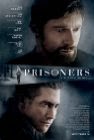
Prisoners
After deeply religious father Jackman's daughter goes missing with a neighbor girl, he targets prime suspect Dano while detective Gyllenhaal pursues other leads. The film doesn't necessarily succeed at being epic, but it is terrifically well-paced for clocking-in at over a two-and-a-half hour runtime—director Villeneuve does an excellent job using fade-outs to skip passed the obvious melodrama. The story involves emotions and chills from all aspects of an unthinkable crime, including: the family members of the abducted children, the investigators and even those close to the suspect. Unfortunately, the movie is dragged by too many obvious detective blunders by Gyllenhaal's characters: 1) Whaaa? I can't discreetly park my car in the middle of the road in broad daylight? 2) Whaaa? I'm going to have all family members take a polygraph, but not consider looking into the fact that one of the fathers owns an abandoned building the girls may be at? 3) Whaaa? When I finally find out one of the fathers owns an abandoned building and I establish my new suspicions of him, I SHOULD call a search team? 4) Whaaa? I've been seeing a lot of mazes ever since I started investigating these girls' disappearances. There IS a connection?Another unfortunate downfall is the annoying and awkward light adjustments between interior and exterior scenes.
The moral of a film should either raise questions, or provide answers or some sort of hope. This film just kind of confuses, as it doesn't really grasp hold of how suspects are sometimes guilty until proved innocent or how there are some ridiculous limitations the law has at preventing and/or solving crimes. Either: A) make a statement, or B) give the audience something to reflect on. This film seems to do neither.
It would be nice to go into a crime-thriller with an open-mind and NOT have to suspend as much disbelief. But all-in-all, not a complete waste of a film.
Wednesday, August 28, 2013
The Cornfield People
The Cornfield People: The youngest lost film
Wikipedia describes a lost film as "a feature or short film that is no longer known to exist in any studio archives, private collections or public archives such as the Library of Congress."
The further back in film history you go, the longer the list of lost films get. For the most part, this is the result of studios failing to preserve anything made before the 1930s because these films were thought to have no commercial value (wrong!), or because the nitrate-film that was used for most movies before 1952 caused easy deterioration and/or spontaneously combustion. The Martin Scorsese's Film Foundation estimates 90% of movies made in the silent film era to be officially lost!
While lost films are indeed common during the early age of cinema, the list gets shorter and shorter once you hit the 1950s. By the 1970s, the list narrows to only about four films. A modern lost film is as rare as a gold dust.
A 1999 production called Puppet was thought to have been the most recent lost film to date, and before that was Sam Raimi’s film debut entitled Clockwork in 1978. Both have since been rediscovered. However, there is one film called The Cornfield People that is believed to be filmed and completed between 1999 and 2001, and is currently considered the youngest lost film.
Wikipedia describes a lost film as "a feature or short film that is no longer known to exist in any studio archives, private collections or public archives such as the Library of Congress."
The further back in film history you go, the longer the list of lost films get. For the most part, this is the result of studios failing to preserve anything made before the 1930s because these films were thought to have no commercial value (wrong!), or because the nitrate-film that was used for most movies before 1952 caused easy deterioration and/or spontaneously combustion. The Martin Scorsese's Film Foundation estimates 90% of movies made in the silent film era to be officially lost!
While lost films are indeed common during the early age of cinema, the list gets shorter and shorter once you hit the 1950s. By the 1970s, the list narrows to only about four films. A modern lost film is as rare as a gold dust.
A 1999 production called Puppet was thought to have been the most recent lost film to date, and before that was Sam Raimi’s film debut entitled Clockwork in 1978. Both have since been rediscovered. However, there is one film called The Cornfield People that is believed to be filmed and completed between 1999 and 2001, and is currently considered the youngest lost film.
The few people who have heard of this movie—and the fewer who have claimed to have watched it—know it better for its controversial subject matter: the meaning of life and what comes after death. Many maintain that the film doesn't exist and never did, given the lack of proof—even a lot of the old lost films have proof of existence through publicity stills, ticket stubs, theatre listings or copyright registration… but not The Cornfield People.
However, Joey L. Asap’s (Red Sands at Dawn and Buried with Leather Gloves) may have been the one at the helm of The Cornfield People.
Around late-1999, Asap was spotted with a small film crew in the Lake Stevens, WA, near the cornfields at the Carleton Farm. Nothing ever came from this well-known citing, leading many to assume he was filming his unrealized fourth film… which is rumored the mysterious Cornfield People.
Asap's website had confirmed his fourth film's premise was to be based on a banned essay he wrote for Paranormal Pacific entitled “The Truth and No Room for Debate”. Considering that Paranormal Pacific published a lot of articles that either riled people up or made the small press look bad, it has been long discussed what Asap’s essay could be about and why it was ultimately banned. Many at www.joeylasap.org’s message board conclude that the controversy of Asap’s essay could easily be related to the meaning of life and what comes after death… the supposed plot of The Cornfield People!
If anyone has any more information about this supposed film, please reply to this blog or e-mail me at dant3p3rk1ns@gmail.com.
Subscribe to:
Posts (Atom)